Online Dating Websites in United Kingdom
In just a few years, internet dating sites have become one of the preferred ways of socializing for many young and not-so-young people in our society. Anything is possible in them, from meeting people with similar tastes, have a long-term relationship or meet people for quick sex. All kinds of niches and services are available to meet that special person in internet.
Below you can see the dating pages which are working best based in users opinions on the ease of dating the people on those pages. Once you get there, whether the couple is stable or not, depends on more factors.
The best dating sites in UK
-
Match
The most popular online dating service in UK
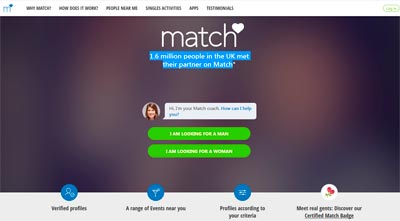 With highly detailed profiles you can use the advanced search to look for compatible partners or simply take a look to the profiles in the member’s zone. 1600000 men and women in the United Kingdom knew their partner through Match. This popularity gives you a great variety of profiles to search for your lover.View
 -
eHarmony
Find the compatible single
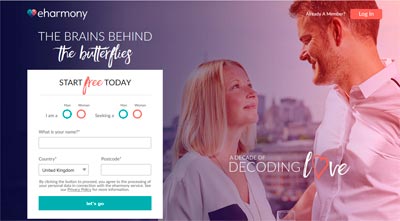 eHarmony’s goal is to know you deeply so they can make a real efficient process to select a compatible partner for you. eHarmony remains committed in researching the factors of long-term couples success through constant scientific research to make sure that its partner recommendation model is still relevant to all kind of persons.View
 -
Be2
1.6 million people in the UK met their partner on Match
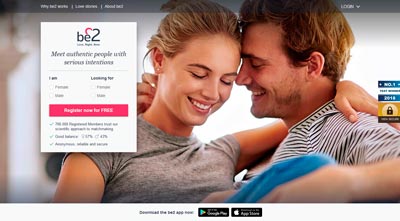 Be2 unites singles in search of love. When you’re clear about “I’m looking for a partner”, be2 puts everything in your power to help you meet this goal. Thus, whoever is looking for contacts with women or to find a male partner receives a list of proposals from which to choose the people with whom they best fit as a couple.
 -
Victoria Milan
Extramarital affairs and casual encounters
 The anonymity is the highest priority in Victoria Milan, the dating service for those married and attached people who are looking for a casual encounter or an affair. Use the anonymity tools to remain hidden and meet a lover for spontaneous experiences. More than 5 million users online prove the quality of their service.
 -
Ashley Madison
Looking for an affair?
 The polemical site for extramarital affairs, Ashley Madison, is still getting thousand of users worldwide everyday. They give the service and married or single women and men demand it. For all kind of discrete encounters, Ashley Madison is there to stay.
 -
Ourtime
Meet mature singles over 50
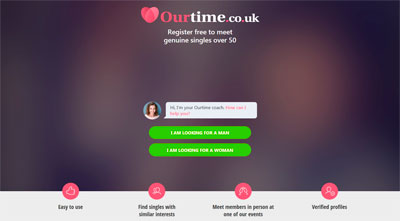 Ourtime is the dating site for singles over 50, it is a version of the Match company focus on mature people so we can expect the same professionality in their service. A great choice if you are in your lates 40 or 50!
 -
iDates
Start flirting with iDates
 For singles searching for an app to meet other singles. The profile verification and filtering options are there to provide a great quality service. Use the date ideas system to get a date in an easy and funny way!
 -
Friend Finder
The place to meet a special person
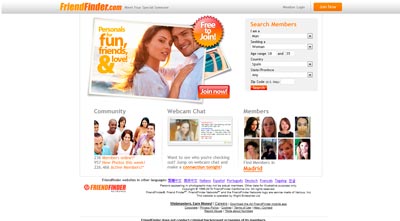 With more than 200K active members, Friend Finder gives not only the usual tools in a dating platform, but also a webcam chat in where you can meet with other people in search of that special one.
 -
Parship
Internet dating service for serious relationships
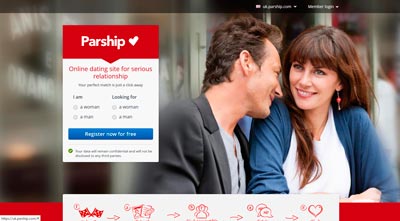 The Parship principle algorithm makes a mathematical selection of profiles to show you daily partner suggestions of potentially compatible couples for a long-lasting relationship.
 -
C-Date
Exclusive and authentic casual meetings
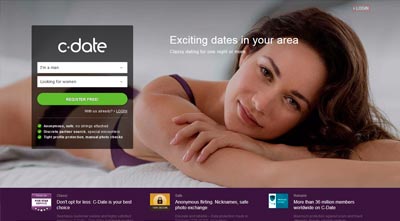 Anonymous, secure with manual verification of the photos and dates without any compromise. Their discreet matchmaking and passionate encounters service is more than a date. Become the owner of the night, there are no limits in cdate!
Free and Paid Dating and Contact Pages
As you know, there are free and paid online dating sites. Usually the registration in the most popular dating sites is free, and with it is enough to enter the page and see what it looks like.
In order to be able to contact people it is normal that the user must purchase a paid or premium subscription in order to be able to access all the functionalities of the page. The quantities that are usually requested vary quite a bit from one page to another.
Many users turn away when a service is for pay, but the truth is that it is normal to do so, as it is an excellent filter to differentiate between people who are serious and those who are not. Even if we want a good service we should pay for it.
On the other hand, having a relationship has never been free, and if you are clear that you want to share your life with someone this is no longer a small cost you will have to face before you meet that person you want so much.

Choosing The Right Digital Dating Services
The matchmaking really begins in choosing the right site for your requirements. You can register in a niche oriented web or a general dating website which caters to anyone, which a massive number or user seeking general or also specific personal characteristics.
Free dating sites in the UK
Most dating services announced as free dating sites offer a free register profile and some free functions to check their platform enviroment. However, uasually, we’ll need to pay for a premium subscription to use all the tools and functions to contact another users.
There are also some sites which use the freemium model, where you are able to use the service to contact other people but you have some restrictions. You can use it for free or pay a little amount to get extra functions so you have the best chances to find a partner.
Advantages of online dating
Why online dating beats off real-life dating
Have you been looking for a reason to put yourself out there online (other than your mother’s borderline stalky behavior in pursuit of grandchildren?) Dating sites have more than one draw to the perpetually single and some of them may surprise you…
-
Online Dating is Cheaper
Sure it’s obnoxious to fork over upwards of $25 a month for premium dating site memberships and extras like digital “coins” and “flowers,” but have you actually calculated the cost of a real life date recently? Between movie tickets and dinner (and if the date goes south, the restraining order paperwork) you can end up over $100 in the hole per date.
-
You Control the Flow of Information
Everyone’s got something. Maybe you’ve got a slight stutter or you can’t tell navy blue from black or perhaps you sort of always smell like your grandma’s house. Whatever your “thing” happens to be, it doesn’t have to be revealed until you decide it’s time when you’re dating online…wait until you’ve made a connection to reveal your downside rather than getting ditched mid-introduction in real life.
-
It’s Your Speed
Say you’re one of those people who aren’t good at making conversation with strangers or perhaps you’ve just come out of a bad relationship and you expect Mr. Right to take it painfully slow. Like, chastity belt slow. Online dating allows you to get close when you feel it’s right, not just because it’s date #3 and you’ve got a wedding coming up you really don’t want to go to stag.
-
Less Club Music
How many times have you cursed the day Kanye West was born from the dance floor of a club at 1:00am before going home alone and rejected (again)? Yeah, there’s no Kanye in online dating if you don’t want there to be.
-
Your Date is Pre-Qualified
Depending on which dating sites you use to make connections you can really narrow down your dating field from day one. Let’s say you’re a single parent or you really, REALLY like guys with mustaches – there’s a dating site for that. No more awkward dealbreakers coming up halfway through your first meal with a new date.
-
You’ll Become a Multi-Tasker
Unlike the real world dating scene wherein juggling 11 potential mates at once is considered, you know, vile, in the online dating world you can have tons of conversations and future-dates bubbling at once without anyone getting offended. That’s the way it works online and everyone’s down! It’s like the 60s!
-
Make a Move…Digitally
The great thing about the internet is that it can instantly transport you from Scranton, PA to, say, San Francisco or even Buenos Aires, if you’re feeling saucy. Online dating expands your dating circle geographically in a way real-world dating will never be able to do which is good news for everyone willing to relocate for love.
-
It’s Effective
The real story behind online dating: Dating. Sites. Work. Maybe it’s that many digital daters are more inclined to actively pursue a serious relationship than casual real-world singles or maybe it’s the way dating sites weed out bad matches before they begin and waste everyone’s time in the process. If you’ve got the time, the perseverance and the desire to find a partner online rest assured there’s a real match just waiting for you on the interwebs. You’ve just got to find it.

Online dating isn’t just the wave of the new millennium, it’s actually better than traditional dating for a number of reasons. If mixers, set-ups and the bar scene just aren’t working out for you, you know where to go next…